We have long been aware of the many ways that the media and society can create eating disorders, especially in children and teens. When people – especially young people – see unrealistic, ultra thin bodies on and in magazines, it can conflate body size with self-worth in ways that affect a person’s mental health.
Though this was already a narrow and incomplete way to view the development of eating disorders, it was one of many issues that we’ve become more aware of in recent years, and many have taken steps to address.
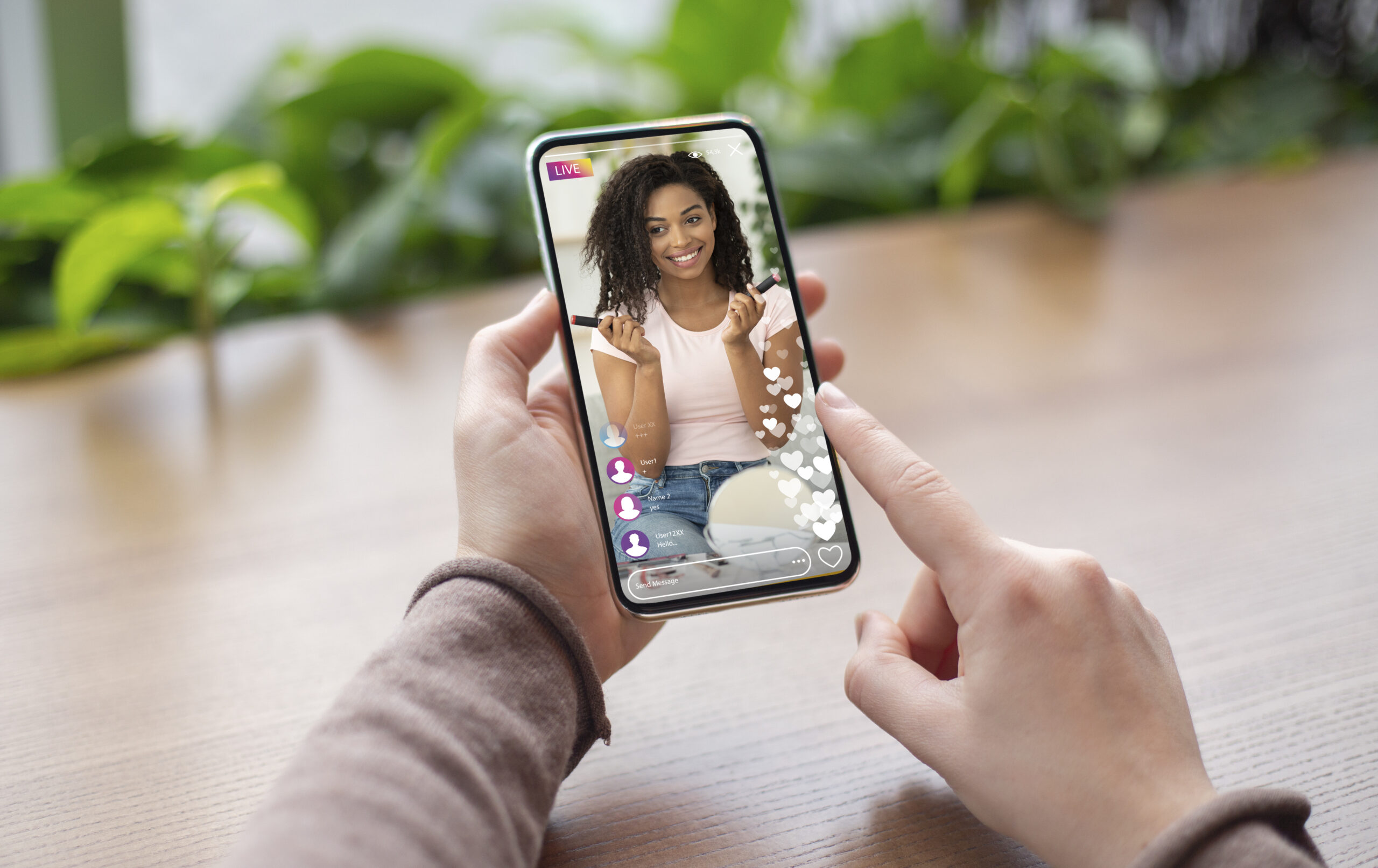
But now, we’re finding that disordered eating is being fed in new ways, many of which are difficult for us to manage. One contributor is our reliance as a society on short form videos. Research on TikTok, Instagram Reels, and YouTube Shorts have begun to increasingly contribute not only to diagnosable eating disorders, but also other forms of disordered eating.
It’s causing these problems not only in teens, but also adults, many of whom are finding themselves limiting their diets and adjusting their food intake due to misinformation and dietary advice they see in these short videos. Let’s explore some of these issues below.
The Algorithm Is Built to Find What Keeps You Watching
One of the greatest challenges can be found in engagement algorithms. Short-form platforms work differently than a feed of posts from people someone chose to follow. The recommendation system is constantly testing what keeps a specific viewer watching, and adjusting the stream in real time based on what it learns.
A 2024 study using data donated directly from TikTok users found that the recommendation algorithm delivered disproportionately more appearance-focused, dieting, and pro-eating-disorder content to users who already had an eating disorder, independent of what those users explicitly liked or searched for. A separate review of this research found that simply engaging with appearance-related content, even passively, predicted the algorithm recommending more of the same material going forward.
Qualitative research backs this up from the inside. In a 2025 study published in the Journal of Eating Disorders, researchers interviewed young adults with a history of disordered eating about their experience with TikTok’s algorithm. Participants described a pattern the researchers called “View One, See More”: watching a single piece of content was often enough to shift an entire feed. Some described a kind of morbid curiosity that kept them watching content they knew wasn’t good for them, and a slide from content that started out feeling supportive into content that became harmful over time.
Platforms have banned specific hashtags associated with pro-eating-disorder content for years. Research tracking this over time has found that the underlying content doesn’t disappear so much as it adapts, using coded language and euphemisms that shift faster than moderation can keep pace with.
In other words, a person that has viewed – intentionally or unintentionally – just one piece of diet, body image, or appearance focused content will receive more and more, especially if they continue to watch it, and that content will become increasingly more controversial because statistically that is what generates more engagement.
What This Looks Like for Teens
Adolescence is already a period of heightened sensitivity to peer comparison and identity formation, which is exactly what makes algorithmically optimized content so effective at reaching teens.
The “What I Eat in a Day” trend is a clear example. Conventionally attractive, typically very thin and fit influencers will show others their morning, afternoon, and dinner diets, and those diets are frequently unrealistic for the average person.
Multiple studies analyzing this hugely popular video format have found it overwhelmingly favors a thin body ideal, regardless of who’s posting it or what they’re eating. A teenager watching dozens of these videos a week absorbs a narrow, repetitive message about what bodies and eating are supposed to look like, long before they have the developmental tools to critically evaluate it.
Fitspiration and thinspiration-style content shows the strongest, most consistent link to disordered eating outcomes in the research, stronger than general social media use on its own. That distinction gives parents something more useful to watch for than screen time alone: how long a teenager spends on a phone says less than what kind of content that time is spent on.
What This Looks Like for Adults
This type of content can frequently affect adults as well. A study of 347 women between the ages of 40 and 63 found that media-driven appearance pressure was directly linked to disordered eating attitudes in this age group, connected in part to more frequent negative conversations about body and age with peers, sometimes called “fat talk” and “old talk.”
Postpartum content has also been a problem. Research on the #PostpartumBody hashtag found that nearly half of the videos carried negative body image themes, often centered on how quickly a body should “bounce back” after childbirth. For a population already navigating major hormonal and identity shifts, that’s a lot of appearance pressure arriving at a particularly vulnerable moment.
Men are affected too, though the content often looks different. Research on fitness-focused social media content has linked it to symptoms of muscle dysmorphia and orthorexia, a preoccupation with “clean” eating that can become its own disordered pattern. This kind of content rarely gets flagged the way thinspiration does, since it’s framed around health and discipline rather than restriction.
Disordered Eating Disguised as Wellness
Thus far, we have been talking primarily about what we traditionally view as eating disorders, like calorie restriction. But some of the most damaging and most common content is often not about severe caloric restriction for an ideal body type, but about food restrictions based on what many believe to be sound science.
Much of the most common and persuasive content is poor food choice disguised as wellness.
“Clean eating,” macro tracking, elaborate morning routines built around food rules, and influencers who frame extreme restriction as discipline or self-care can normalize disordered patterns without ever using language a platform’s moderation systems would flag. One of the biggest risks that is becoming increasingly common as a result of this “wellness” content is known as Orthorexia: an obsession with eating in a way that’s perceived as healthy, to the point that it starts controlling a person’s choices and quality of life.
Even body positivity content, which set out to counter thin-ideal messaging, has been found in some studies to carry disordered eating content underneath its surface message. Content doesn’t have to look harmful to function that way.
Scrolling Less and Reducing Disordered Eating Triggers
Patterns are what to watch for, more than any single video or app. A change in mood after scrolling, new rigidity around food, withdrawing from meals with family or friends, or a sudden focus on “clean” eating or body talk are all worth a closer look, whether that’s showing up in a teenager or in an adult in the house.
A few approaches tend to help, for teens and adults alike:
- Watch for Changes in Behavior, Not Just Time Spent — A teenager or adult who seems more anxious, secretive, or rigid around food after scrolling is showing something worth a conversation, regardless of how many hours were logged.
- Talk About the Algorithm Itself — It’s so important that we talk openly about the algorithm and how it affects our viewing habits and opinions – not just with our teens, but between adults as well. No one is immune to the algorithm, but the more we talk about it the more we can resist it when we’re noticing what content we are seeing more and more of.
- Curate Feeds Actively — Unfollowing accounts and reporting content that consistently centers weight, food rules, or body comparison changes what the algorithm serves going forward. It is also a good idea to purposefully seek less damaging content to purposefully alter the algorithm.
- Loop in a Professional Early — A therapist trained in eating disorders and body image work, using approaches like CBT, can help someone build a healthier relationship with both food and their feed before a pattern becomes entrenched.
These same signs apply whether the person showing them is fourteen or forty-five. In an ideal world, we will spend less time consuming this type of short form video. But until then, we need to be proactive in the ways that we try to reduce its impact on our opinions and habits.
Nassau Counseling Services works with teens, adults, and families across Long Island navigating disordered eating and body image concerns, including the ones that started or worsened online. Our eating disorders and women’s mental health services, along with support for teens, are built around exactly this kind of care. Reach out at (516) 973-1032 to talk with our team.
If you or someone you love needs support right now, the National Alliance for Eating Disorders helpline is available at 1-866-662-1235, weekdays from 9 a.m. to 7 p.m. Eastern. For 24/7 crisis support, the 988 Suicide and Crisis Lifeline is available by call or text at any hour.