
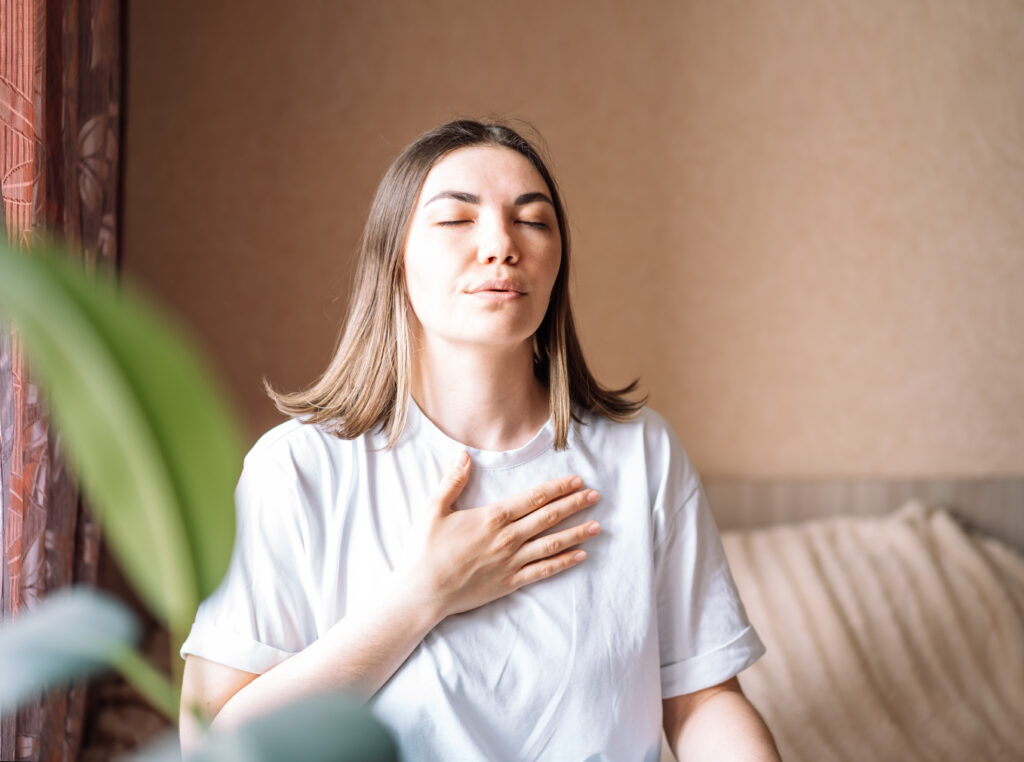
How we breathe and our mental health can interact in what would otherwise be surprising ways. What many people do not realize about our breathing is that it can be affected by anxiety, create the symptoms associated with anxiety, AND be a trigger for further anxiety, all at once.
While it’s not necessarily possible to breathe in such a way that you can cure anxiety itself (as breathing is typically not a conscious behavior and will be affected by stress and anxiousness), gaining a better understanding of the way breathing affects us and what we can do to improve it can help reduce panic attack and anxiety symptoms, and possibly make it easier to control anxiety-related challenges
Tips to Breathe
When we talk about “how to breathe” we’re not necessarily talking about a relaxation strategy. There are relaxation strategies that involve breathing, but those are something you learn separately as you learn coping techniques.
In this case, we are specifically talking about the way you breathe with anxiety, and how you can adapt and respond to those breathing habits.
For this to make sense, let’s first talk about two basics of breathing. When you breathe in, you take in oxygen from the outside world. Your body then captures what it needs from that oxygen and then converts it into carbon dioxide (CO2).
One of the most important things to understand, here, is that while oxygen is what your body needs to live, it ALSO needs at least a little bit of CO2. Many people do not realize that we need our blood to have some CO2 for it to function in the body.
When you have anxiety and panic attacks, you tend to “hyperventilate.” This is when your breathing speeds up, causing you to take in more oxygen before you have time to create more CO2. The problem isn’t necessarily breathing in, but rather breathing out. When you are hyperventilating, you breathe out the CO2 your body has before you’re able to create more.
This causes several challenges:
- A drop in carbon dioxide (hypocapnia) – Low CO₂ levels cause blood vessels to constrict, reducing blood flow to the brain and creating sensations of lightheadedness, dizziness, and confusion.
- Changes in blood pH – As CO₂ decreases, the blood becomes more alkaline (respiratory alkalosis), which contributes to tingling in the fingers, hands, and around the mouth.
- Increased heart rate and chest tightness – The imbalance between oxygen and carbon dioxide activates the sympathetic nervous system, creating sensations that feel identical to danger even when none is present.
- Shortness of breath – Ironically, the more oxygen you inhale during hyperventilation, the more your brain perceives “air hunger,” making it feel as though you cannot take in enough air.
- Heightened anxiety response – The physical sensations caused by these imbalances (dizziness, chest tightness, breathlessness) are easily misinterpreted as signs of a serious medical problem, which further amplifies panic and maintains the cycle.
That is also not the last of the problems. Another issue is that these symptoms create the feeling that you’re not getting enough air. In other words, even though the problem is that you’re not creating enough CO2, the response that most people have is to try to take in more oxygen by breathing more and faster, leading to further CO2 loss.
So how should you breathe instead?
- Pause briefly before the each inhale – Allowing a short natural pause after exhalation helps stabilize the breathing pattern and gives your body more time to produce CO2. It also signals to your brain that oxygen is sufficient and breaks the feedback loop of “air hunger” that fuels panic.
- Slow your breathing pace – When you feel panic rising, your goal is not to take deep breaths but to take slower breaths. Aim for roughly one breath every five to six seconds. Slowing your respiratory rate allows CO₂ to rebuild in your bloodstream, helping restore balance and reduce the lightheadedness and tingling sensations.
- Breathe through your nose, not your mouth – Nasal breathing naturally slows airflow and increases CO₂ retention compared to mouth breathing. It also filters, humidifies, and warms the air, which improves oxygen exchange efficiency.
- Focus on exhalation, not inhalation – Most people instinctively try to “get more air in” during panic, but the real solution is to breathe out more completely. Fully exhaling before taking the next breath prevents CO₂ depletion and activates the parasympathetic nervous system, which helps your body calm itself.
- Engage the diaphragm – Shallow breathing from the upper chest signals stress to the body. Diaphragmatic breathing — where the abdomen rises with each inhale — promotes better oxygen distribution, steadier breathing rhythms, and stronger parasympathetic response.
- Avoid “forced” deep breathing – Trying to take large, deliberate breaths can worsen hyperventilation. The goal is not to overfill the lungs but to return to a steady, balanced rhythm where inhaling and exhaling feel effortless and quiet.
Over time, practicing this form of breathing outside of panic episodes – when you are calm – can help retrain your automatic breathing habits. The aim is to make slower, nasal, diaphragmatic breathing your baseline pattern. When a panic attack does arise, your body will more easily return to equilibrium instead of entering the hyperventilation cycle that makes panic worse.
Slowing Your Breathing is a Great First Step
Changing your breathing patterns is unlikely to stop a panic attack, but it does make them less severe. Because they are less severe, they can also be more manageable, allowing other treatments – like therapy – to have a better chance of providing you with the support you need.
If you’re ready to address your panic attacks, please reach out to us today and let’s talk about the ways we can help you combat your anxiety once and for all.